 Collaboratory for Research in
Computing for Humanities
Collaboratory for Research in
|
Russian Folk Religious Imagination Project
Project Director |
|
Project Co-Director |
Project Home: http://rfri.rch.uky.edu/
Project Description
Popular religion, defined as regional, local, and personal interpretation of official church doctrine, is at the heart of many genres of folklore, including legend, song, ritual, and iconography. It plays a particularly important role in Russia for socio-political and historical reasons. Over the centuries, Russian folk culture and "high" culture have come together in seminal ways; folklore is thus central to a great portion of Russian literature, music, art, and philosophy. Due to the illiteracy of the populace before the Bolshevik Revolution as well as the official policy of atheism from 1917 to 1991, vernacular religious beliefs flourished and became central to a conception of Russian cultural identity. Therefore, an understanding of Russian Orthodoxy depends on a consideration of popular religious conceptions.
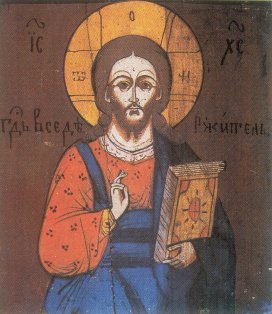
Since the fall of the Soviet Union, scholars have undertaken the study of Russian popular religion in earnest, but there is as yet no comprehensive study of the interrelations between the numerous folk genres and belief. Our multimedia critical edition, the Russian Folk Religious Imagination: The Image of Christ (RFRI), will feature an innovative cross-disciplinary approach combining the study of legends, songs and religious rituals, and folk iconography related to Christ from the Soviet and post-Soviet periods into a comprehensive research project in a digital framework designed to integrate text and multimedia into a coherent whole. Christ is at the heart of the two major celebrations of the Orthodox yearly cycle (Easter and Christmas), he commonly serves as the hero in folk legends and folk religious songs and he is the subject of folk icons, thus we have available a rich array of material to draw on in our digital scholarly edition and archive. Featuring material related to one figure demonstrates the range of existing variants, a key goal for any folklore analysis. If deviations from church doctrine exist about Christ himself, they illustrate the complexity of vernacular religion in Russia and how vernacular belief intersected with doctrine. In particular, we will focus on how this material survived in the populace and played a key role in Russian identity, even in the USSR. This project will be of use to the general public with an interest in Russia as well as specialists in a wide range of disciplines including historians, folklorists, anthropologists, linguists, and scholars of literature and of religion. Using funds from an NEH Digital Humanities Start-Up grant, we have developed an information site that illustrates materials and methods we will apply to our corpus. The current phase of this long-term project will allow us to 1) gather additional primary resources (legends, songs, rituals and folk icons); 2) provide Russian originals and English translations of the original texts; 3) prepare critical materials on the primary resources and situate them in their cultural contexts; 4) develop text, image, audio, and video resources tagged and marked up for open access, online use.
Due to the official policy of atheism in the former Soviet Union, there is a paucity of in-depth research or publications on this topic. Folklorists collecting religious folklore could rarely publish their findings, and collections have languished in archives. Even when published editions did exist, they quickly went out of print, so that specialists elsewhere were unable to do extensive research on popular religion. These factors have limited scholarly understanding of Russian vernacular religion in the 20th century, in particular how it evolved in light of, adjusted to, and even incorporated Soviet ideals. Our web-based critical edition on folk religion will provide unprecedented access for scholars and students to materials they could not obtain without extensive archival work or field research. Scholars will be able to read currently inaccessible texts, access audio and video files of rituals and of song and legend performances, and consult still images of folk icons. Through the digital interface, users will be able to search, compare, and study the entire range of text, image, audio and video materials in ways that are not possible in a print edition. To increase access for both specialists and the general public all materials will be presented in both English and Russian. Our international team of specialists (based in Russia, Britain, and in the United States) brings superb credentials that include: interdisciplinary expertise in the humanities; extensive field research and archival experience; an exemplary track record of scholarship on Russian ritual, legend and song; access to material from different geographic areas of Russia; and extensive experience in multimedia production, text encoding, and online publication. The project will increase knowledge of and scholarly interest in Russian popular belief. Exploiting digital technologies will combine disparate elements of folklore into a more comprehensive, unified consideration of vernacular religion.
Research on the RFRI project has been supported by:





© Research in Computing for Humanities
Contact: lauersdorf [at] uky [dot] edu
Latest update: 07 February 2021